Before You Landscape: 7 Questions to Ask About Your SC Yard
Oct 01, 2026Ask These 7 Questions Before You Start Landscaping
A good landscape should begin prior to the first plant being put in the ground. For homeowners in South Carolina, this means first working out how the yard functions at the moment, considering how they want to use it and determining what degree of maintenance suits their lifestyle. Proper planning can avoid the problems of wasted plants, difficulties with drainage, and overcrowded beds.
Before you select the plants, mulch, paths, or lawn alternatives, ask yourself these seven questions to establish your priorities. The landscape design services offered by Front Yard Forest are based on the same fundamental principle: designing the garden in accordance with the particular property rather than forcing each property to fit a standard formula.
1. What Do You Want the Yard to Do?
Commence by considering the main purpose rather than the plants. If your aim is to have more shade, to provide a space for children or pets, to have room for entertaining, to reduce the amount of area that needs mowing, to improve privacy, to increase the seasonal interest, or to include space for herbs and edible plants, then the yard can have more than one function, but it's important that your priorities be clearly established before you work out the layout.
Consider the way in which you currently move around the property, paying attention to the areas where people tend to walk, the places where outdoor furniture is probably going to be placed, and the views that you would like to retain or diminish. By focusing on the intended use from the start, making decisions regarding the plants and the hardscape becomes simpler.
2. How Much Sun and Shade Does Each Area Receive?
A bed situated in a position where it gets strong afternoon sun is quite unlike a shaded area located under mature trees. Rather than suppose that the entire yard has identical conditions, you should observe the property at various times of the day. Morning sun, late-day heat, deep shade, and filtered light all affect which plants feel comfortable in a particular space.
This point is especially relevant for native plant landscaping. Just because a plant is native doesn't mean it will suit every situation; you still need to match the plant to the light, soil moisture, drainage, and its mature size.
3. What Happens to the Water After a Heavy Rain?
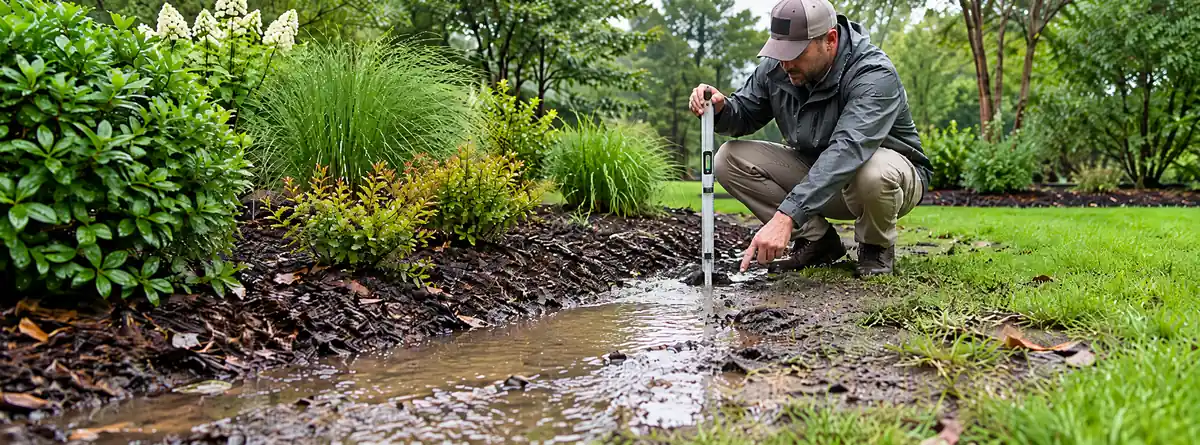
Water movement has the ability to alter the whole landscape. Look for low areas, washed-away mulch, wet spots, erosion, water flowing from downspouts, and places where water runs across a walkway or pools near the planting beds. These signs are easier to spot during or just after it has rained.
Should there be a drainage problem, it should be dealt with first before investing in costly plant material. Measures such as grading, selecting different planting zones, applying mulch, adopting rain-garden ideas, and other water conservation solutions could be of assistance, but the appropriate course of action will vary according to the property.
4. What Is Going On Below the Surface?
The type of soil has an impact on the roots, on the moisture content, and on the plant's long-term performance. In some gardens there are areas with compacted soil, construction waste, thin topsoil, sections that are heavy in clay, sandy patches, or a mixture of soil types over the property. Before deciding on a major planting plan, one should note how well the soil drains, how difficult it is to dig, and whether some areas tend to have problems again and again.
The aim is to understand the conditions well enough to select plants and improvements that suit them.
5. What Should Remain, Be Moved, or Be Removed?
A redesign needn't start from scratch. Trees that are well-established, healthy shrubs, useful areas of lawn, the present paths, and the existing beds might be retained. However, other features could be badly situated, hard to maintain, or no longer useful.
Prepare a simple list consisting of the things you like, the things that cause problems, and the areas in which you are unsure. Since good existing elements have already been established, including them can also give the new design a more settled appearance.
6. How Much Maintenance Do You Actually Want?
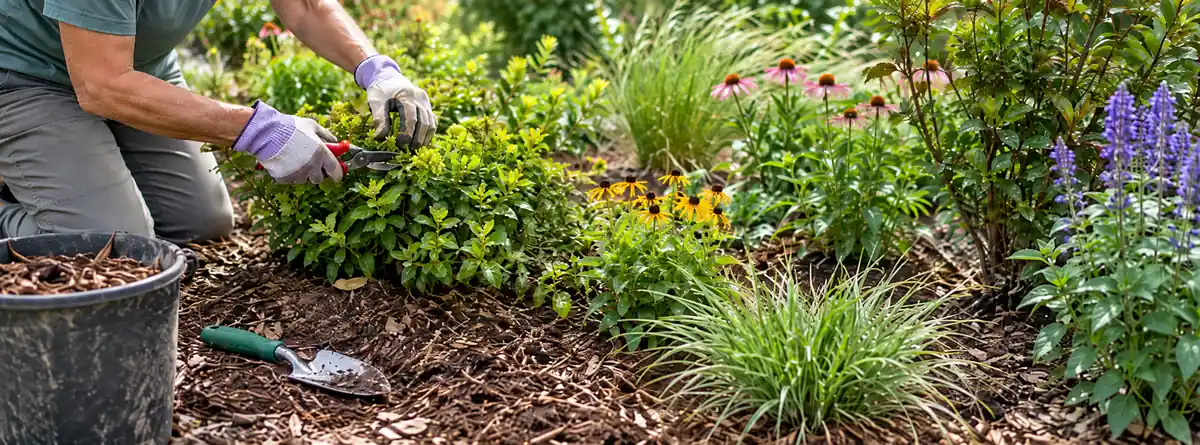
All landscapes need a certain amount of attention. The main point is how much time you actually intend to devote to mowing, pruning, watering, weeding and carrying out seasonal cleanups. A design which looks appealing but requires more work than you are willing to do will eventually become frustrating.
If the main problem is mowing, it might be worth thinking about turning some of the turf areas into planted beds, groundcover areas, or other lawn alternatives. The best option depends on sun or shade, foot traffic, moisture levels, slope, and how you use the area.
7. What Changes Will Take Place in the Yard as the Plants Grow?
Young plants can make a new bed appear open, but shrubs, grasses and trees require space to grow. Find out how tall and how wide each of the main plants is expected to become and whether or not it might eventually block a window, crowd a walkway, interfere with the utilities, or overwhelm the plants nearby.
You should also consider what will happen beyond the first season. A well-thought-out arrangement must account for future shade, access for maintenance, seasonal changes, and how the landscape might develop over a number of years. Planning with the mature size in mind makes the garden seem purposeful rather than crowded.
Bring the Answers Together Before You Buy Plants
The seven questions above aren't meant to complicate landscaping; they are meant to avoid costly guesswork. Knowing how the property is used, how sunlight varies, where water goes, what kind of soil it has, what should stay in place, how much maintenance you want, and how the plants will grow as they mature makes the design process much clearer.
Front Yard Forest can assist homeowners in Columbia, Lexington, Irmo, Lake Murray, Northeast Columbia, Elgin, and other nearby areas of South Carolina in turning their observations into a plan that is specific to their property. If you would like to talk about your land, you can contact Front Yard Forest to begin with the garden you actually have and the goals that are most important to you.